When we met up this week for a coffee, Sue and I decided it was about 12 years ago that we first met. At that time, I had a thriving flute teaching business and one of the pleasures of that was teaching adult learners / returners. Sue came to me for lessons, and not only did I have the pleasure of witnessing her improved playing, but also of seeing her invest in a lovely new instrument, which she still plays.
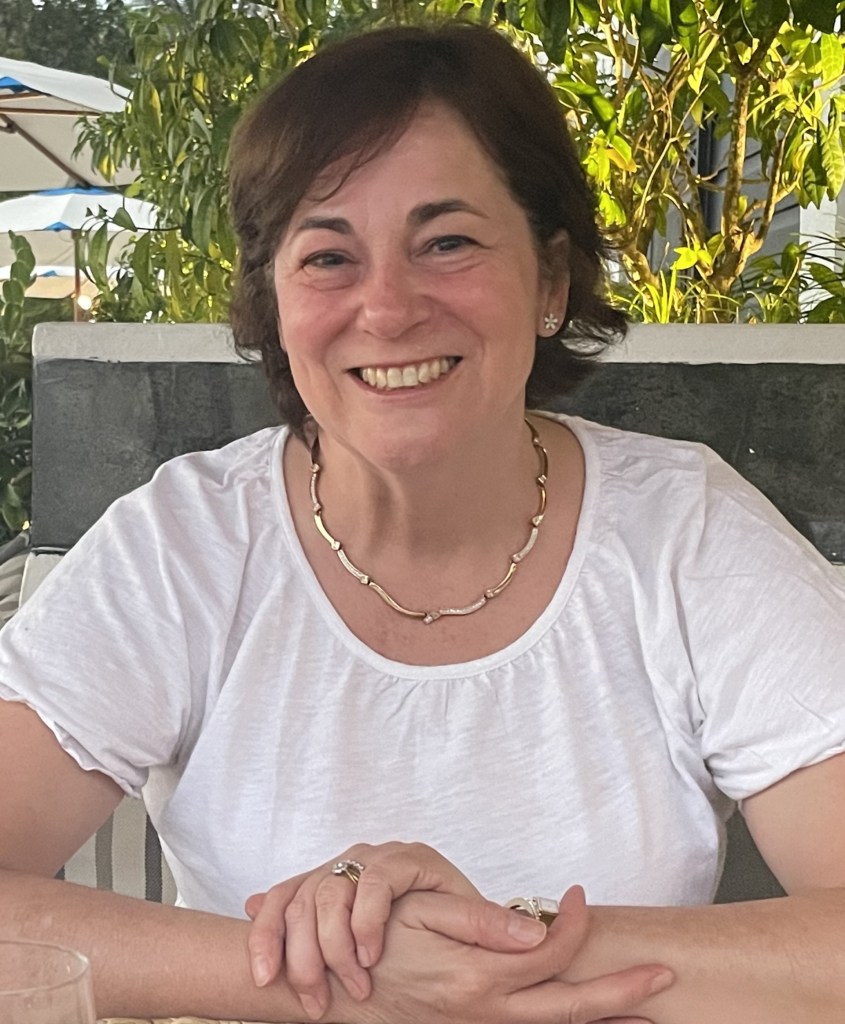
Sue describes herself as genuine, competent and happy. She shies away from conflict, and can suffer from self-doubt. She hopes that she is likeable, and knows that she thrives at work and socially when she feels she’s liked. When I ask how she feels turning 60, her response is upbeat – at the same time as feeling slightly reflective, she also feels very positive about the future… more positive than she maybe did at 50, which she saw as a bit of ‘a bump in the road’. At that point, she felt a lack of control over life – her kids not yet grown-up enough not to need support, and still *needing* to work. 60 is more of a turning point.
By profession, Sue is a GP. As a little girl, she had wanted to be a ballerina, and then an air hostess – a choice that was summarily dismissed by her mother with ‘Oh Susan… it’s just a glorified waitress!’… which says more about attitudes than about cabin crew itself. Inspired by the TV programme ‘Their life in your hands’, featuring surgeons in the operating theatre, her conviction from age 11 that she wanted a career in medicine was rather more acceptable. Sue told me that last doctor in her family was doctor to the Brontë sisters and that her maternal grandfather was a pharmacist, but that aside, scientists were not prevalent in her family. She was lucky to get into her university of choice and to thoroughly enjoy medical studies, and her career has been (and continues to be) interesting and varied. Aside from her GP work, Sue trains, examines and appraises GPs, as well as quality assuring other training providers, amongst whom the MoD. This has taken her to some amazing places, including warships, aircraft carriers and military bases, and she admits that this gives rise from time to time to ‘imposter syndrome’. ‘When I’m standing on the deck of HMS Prince of Wales, I sometimes think to myself ‘How did I get here? I’m just a GP from Cardiff’’ she tells me. But she’s not ready to quit working yet, rather to work more on her own terms and pare back a bit now that she’s 60 and can supplement income with pension.
With that in mind, I’m pleased to hear that her plans for the future include playing more flute and piano. She’s lucky enough to have a ‘Girl Cave’ at home, with her musical instruments and sewing machine, as well as her work desk… for the time being. She would also like to travel and explore more and has a big holiday in Italy planned this summer as part of her 60th celebrations. Having an Italian grandfather has motivated her to want to learn the language… at least enough to make the right choices at the Italian ice-cream shops! Spending time with her grandchildren is also something that figures in both the present and the future, although like many grandparents she loves it when they come and loves it just as much when they go home again.
Talking about formative points in her life, Sue picks out having her own kids and her Mum dying of cancer aged 69. She remembers the moment when they got the diagnosis, and how difficult it was to process. Being a person who always had a plan B, this was a moment in time when she realised that sometimes there is nothing you can do to put things right. Her experience with her Mum developed her own empathy, making her very aware of how words can hurt or heal. ‘I think it made me a better GP too’, she told me, and it also made her not want to put things off in life and then miss out by waiting too long. We agree on the old adage that you’re more likely to regret the things you didn’t do in life than the things you did. She gives me an example of a time in her late 20s when she decided to act on a desire to sing in musicals. ‘I just woke up one morning and decided to do it’, she tells me, ‘so, I joined a society and ended up in Guys and Dolls, Oklahoma, and playing the lead in Calamity Jane!’.
Our conversation turns to the world today, as compared to when we were growing up. Sue describes society today as the ‘Amazon Prime generation’ – people used to the immediacy of everything; with anything they want delivered in an instant and binge-watching entire tv series being preferable to waiting on weekly instalments. Social media is something she sees as making the world a worse place, citing the proven damage over-consumption does to young brains, and appreciating the steps being taken by some governments to look at regulation of social media usage in under 16s. In her work, Sue tells me how sad and frustrating she finds the stratospheric rise in mental health issues, especially amongst young people. There are definitely two sides to this coin – on the one hand, she acknowledges that people are too often made to feel that they’re not resilient enough and are blamed for not being able to manage things that really aren’t their fault, such as unreasonable pressure in the workplace. But she also feels that some mental health issues are almost ‘learned behaviours’ and that younger people are not developing the skills and coping mechanisms that the older generations did. We talk too about COVID, which had particular implications for her as a medical professional. But on a personal level, she recognises that it made her consider what’s important in life and appreciate what you have (a nice house and garden) and don’t have (small kids to home educate!).
I am struck by the frequency with which Sue tells me how fortunate she considers herself to be. She is a very positive and genuinely happy person, who is ok with where she is in life. We talk briefly about how her Christian faith affects her view of life and death, and she tells me that believing that ultimately there’s a bigger picture than our lives on earth helps her to face the future without fear. Finally, I ask what advice 60-year-old Sue would give her younger self. ‘Worry less!’ is her response. Sue tells me she’s always been a worrier, and maybe she wouldn’t be herself if she didn’t worry. But she also accepts that at the important moments in life, worrying doesn’t help. And that’s the only advice she has… because, as she tells me, ‘Other than that, I’m happy!’
 50shadesofbrave